Universities in China admit international students at every level — from language courses to PhD — and the choice is wide: from world top-30 universities in Beijing and Shanghai to strong specialised universities in Harbin and Hangzhou. Here is which Chinese universities lead the rankings, how they differ, what they cost and how to choose the right one for your goals. For the step-by-step admission process, see How to Apply to Study in China in 2027.
Key facts • Four Chinese universities are in the world top 30 of ARWU 2025: Tsinghua, Peking, Zhejiang and Shanghai Jiao Tong. • The highest-ranked university is not always the best choice: the strength of your subject and requirements you can realistically meet matter more. • Self-funded tuition is roughly RMB 14,000–50,000 a year depending on level and university. • Leading universities publish admission information for international students in English. |
Types of universities in China
Chinese universities fall roughly into three groups: leading research universities, specialised universities and regional universities. The group determines competition, requirements and cost.
- Leading research universities — Tsinghua, Peking, Fudan, Zhejiang, Shanghai Jiao Tong. High competition, strong research, many English-taught programmes. Most of them take part in the government's Double First-Class initiative, which supports world-class universities and disciplines.
- Specialised universities — technical, petroleum, normal (teacher-training), language and medical universities, such as Harbin Institute of Technology or China University of Petroleum. In their field they are often stronger than comprehensive universities.
- Regional universities — provincial institutions. Lower competition, lower fees and easier access to university scholarships.
You will also see the older labels "Project 985" and "Project 211" in university profiles — they still help to gauge a university's standing.
Top universities in China by ranking
In the Academic Ranking of World Universities (ARWU) 2025, the leading Chinese universities are:
ARWU 2025 rank | University | City | Strong fields |
18 | Tsinghua University | Beijing | Engineering, IT, architecture, economics |
23 | Peking University | Beijing | Sciences, humanities, medicine, economics |
24 | Zhejiang University | Hangzhou | Engineering, IT, agriculture, medicine |
30 | Shanghai Jiao Tong University | Shanghai | Engineering, medicine, business |
Source: ShanghaiRanking — ARWU 2025
These universities publish admission information for international students on their websites: Tsinghua University, Peking University, Zhejiang University, Shanghai Jiao Tong University. Another top-tier option is Fudan University in Shanghai.
Important Top universities have high competition and requirements: excellent grades, a high HSK or IELTS score and, for bachelor's programmes, the CSCA exam. Apply to 1–2 top universities and, in parallel, to 2–3 universities with more realistic competition. |
Strong specialised universities worth considering
Beyond the famous names, specialised universities offer excellent programmes in their fields — often with lower competition and fees. Several of them are in Harbin, a north-eastern city with comparatively low living costs; read more in our Harbin study guide.
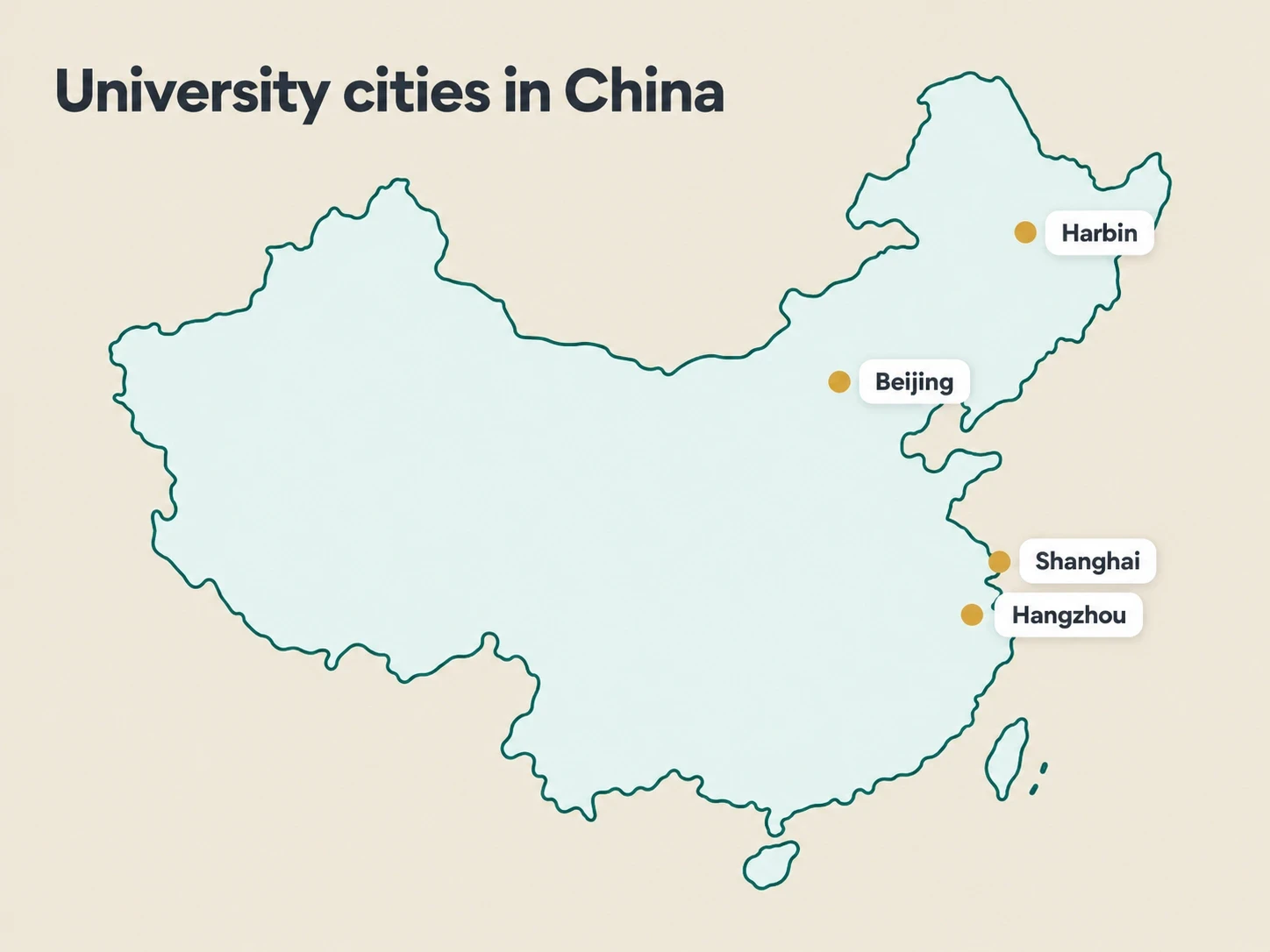
University | City | Known for | Admissions site |
Harbin Institute of Technology | Harbin | Engineering and IT; Chinese- and English-taught programmes | |
Harbin Engineering University | Harbin | Shipbuilding, marine engineering, nuclear engineering | |
China University of Petroleum (Beijing) | Beijing | Petroleum, energy, management | |
Zhejiang Normal University | Jinhua | Education, Chinese language; affordable master's programmes |
Source: university websites listed in the table
Entry requirements at Chinese universities
Requirements depend on the university and level, but the logic is the same: an education document, language, age, and funds or a scholarship. Top universities set a higher bar.
Requirement | Example | Source |
Chinese-taught master's | HSK 4, 210+ | |
English-taught master's | TOEFL 80+ or IELTS 6.0+ | |
Age for master's | 18–35 | |
Funds in your account | At least RMB 30,000 | HIT, Zhejiang Normal University |
For bachelor's programmes in 2027, universities are also introducing the CSCA exam for international applicants. If you don't speak Chinese yet, see How to Apply to China Without Knowing Chinese.
How much do Chinese universities cost?
Self-funded tuition is roughly RMB 14,000–50,000 a year: language programmes and regional universities are cheapest; English-taught programmes and medicine cost more. Example master's fees from universities' 2026 guides:
University | Chinese-taught, RMB/year | English-taught, RMB/year |
Harbin Institute of Technology | 28,000 | 34,000 |
Zhejiang Normal University | 22,000 | 24,000 |
Peking University, ECE (Shenzhen) | 33,000 | — |
Source: Harbin Institute of Technology, Zhejiang Normal University, Peking University
Add accommodation, insurance and living costs — Beijing and Shanghai are noticeably more expensive than Harbin. For a full budget, see How Much It Costs to Study and Live in China.
How to choose a Chinese university
Choose by the strength of your subject, realistic requirements and budget — not just by the overall ranking.
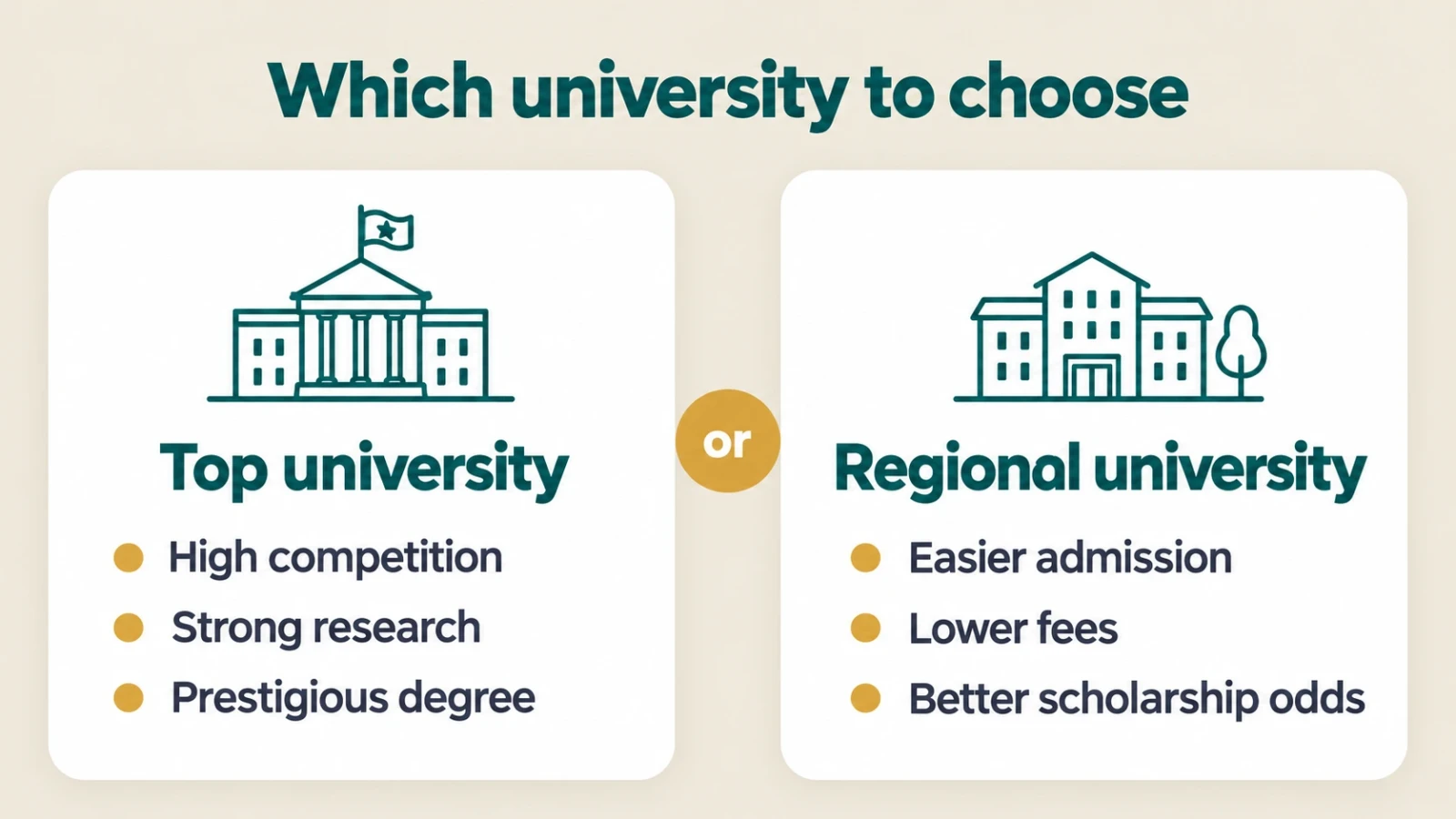
Check six criteria:
1. Subject. Curriculum, labs, faculty. Subject rankings sometimes matter more than the overall one.
2. Language of instruction. Is there an English-taught programme, or do you need HSK?
3. Requirements. Do you meet the language, GPA, age and CSCA requirements?
4. Cost and scholarships. Tuition, housing and university scholarships.
5. City. Climate, cost of living, internships. Compare cities in Best Cities in China for International Students.
6. Degree recognition. Check how your home country recognises Chinese degrees, especially for regulated professions such as medicine.
English-taught programmes at Chinese universities
English-taught programmes are offered mainly by leading and large specialised universities: engineering, IT, business, economics, international relations and medicine (MBBS). They let you start without Chinese but cost more: at Harbin Institute of Technology, for example, an English-taught master's costs RMB 34,000 a year versus RMB 28,000 for a Chinese-taught one.
Keep two things in mind. First, the choice of subjects in English is narrower than in Chinese. Second, you will still need Chinese for daily life, internships and work in China — many students study it at university alongside their degree.
What student life at a Chinese university looks like
International students in China usually live in an international dormitory on campus. Large campuses are small towns: teaching buildings, libraries, canteens, sports facilities, shops and a clinic.
Almost every university has an international office or a college for international students. It helps with registration, converting your visa into a residence permit, insurance and housing — as China University of Petroleum (Beijing), for example, describes. When choosing a university, look at how detailed its international students' website is: it is a good sign of how well the university supports international students.
How to apply to a Chinese university: in brief
Applying to a Chinese university takes six months to a year. The main steps are the same at most universities:
1. Choose your level, subject and 3–5 universities.
2. Take a language test: HSK for Chinese-taught programmes, IELTS or TOEFL for English-taught ones. For bachelor's programmes, prepare for CSCA.
3. Prepare your documents with notarised translations.
4. Apply through the universities' online systems — for a self-funded place and a scholarship.
5. Receive your Admission Notice and a JW201 or JW202 form.
6. Get an X1 student visa and arrive for the start of classes.
For details on each step and deadlines, see How to Apply to Study in China in 2027.
Common mistakes when choosing a university
1. Choosing by overall ranking alone, without checking the strength of the subject.
2. Applying to only one top university with no backup.
3. Not checking the language of compulsory courses — some "English" programmes include Chinese-taught modules.
4. Ignoring the city's cost of living, not just tuition.
5. Relying on last year's requirements instead of the new admission guide.
Frequently asked questions
What is the best university in China?
In ARWU 2025, Tsinghua University has the highest rank among Chinese universities — 18th in the world — followed by Peking University (23rd) and Zhejiang University (24th).
Can international students get into Tsinghua or Peking University?
Yes, both admit international students at every level. Competition is very high: you need excellent grades, a high language score and, for bachelor's programmes, CSCA results. Apply to several universities in parallel.
Which Chinese universities are best for international students?
The ones that match your subject, language and budget. Top universities are best for research and prestige; specialised and regional universities often offer strong programmes with lower fees and better scholarship chances.
Do Chinese universities teach in English?
Yes, especially leading universities — in engineering, IT, business and economics. English-taught programmes usually cost more than Chinese-taught ones.
Do I need the CSCA exam to apply to a Chinese university?
For bachelor's programmes in 2027, at many universities yes: CSCA is being introduced as a standardised exam for international applicants. It is not required for master's or PhD programmes, where your degree, language level and study plan matter more.
Can I transfer from one Chinese university to another?
Sometimes, but transfers and credit recognition are not guaranteed and depend on both universities. It is safer to choose the right university from the start or apply again at the next level.
How many Chinese universities accept international students?
Hundreds of Chinese universities admit international students, from top-tier to regional. You can browse universities and programmes on the official Study in China portal.
Quick action plan
1. Decide on your level, subject and language of instruction.
2. Shortlist 1–2 top universities and 2–3 with realistic competition.
3. Check requirements and fees in each university's 2027 admission guide.
4. Take HSK or IELTS; for bachelor's programmes, prepare for CSCA.
5. Apply for both a scholarship and a self-funded place.
We'll help you choose a Chinese university GE Agency will shortlist universities for your subject, language level and budget, assess your chances of admission and a scholarship, and guide you through the application. Book a consultation. |
Information checked on 4 October 2026. Rankings, requirements and fees change — always check the official university websites before applying.
Useful articles about studying in China
- Scholarships to Study in China: Chinese Government Scholarship, University and Provincial Grants
- Master's Degree in China for International Students: Programmes, Requirements, Costs and Admission
- The CSCA Exam in 2027: Who Needs It, Subjects, Dates and Preparation
- Medical Education in China in 2027: MBBS, Admission and Diploma Recognition